
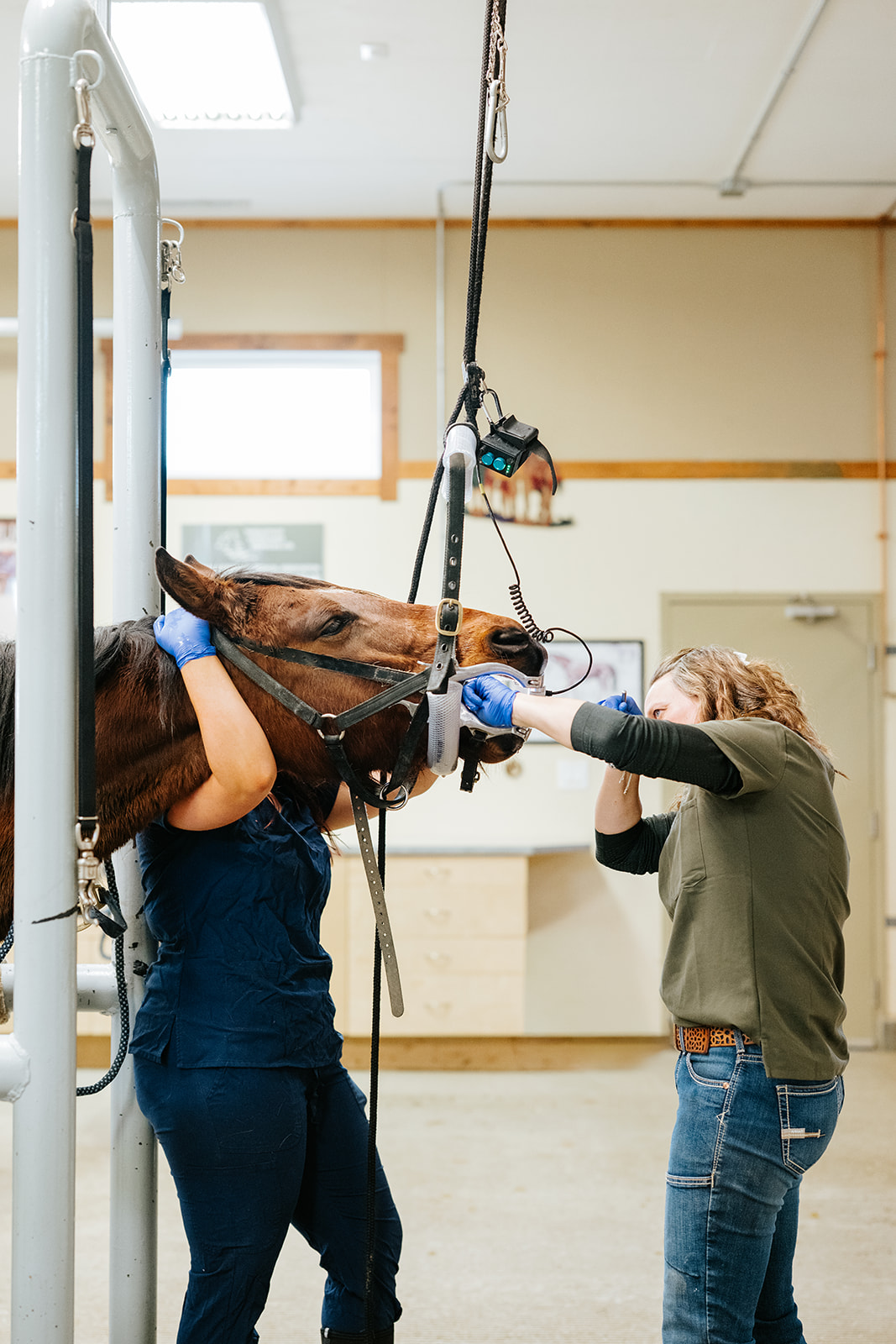
Proper dental care is an essential part of keeping your horse healthy, comfortable and performing at their best. One of the most common dental procedures recommended by veterinarians is a dental float. But what exactly does that mean?
A dental float is the process of filing down sharp or uneven enamel points on a horse’s teeth. Over time, a horse’s teeth can develop rough edges that may cause discomfort and interfere with normal chewing or negatively affect performance. During a float, specialized dental instruments are used to smooth these areas and help restore proper balance within the mouth.
Unlike human teeth, a horse’s teeth are continuously growing. Because of the unique way horses chew, uneven wear can naturally occur over time.
Regular dental floating helps:
- Prevent pain and ulcerations: Sharp enamel points can rub against the cheeks and tongue, leading to painful sores (oral ulcers) and inflammation inside the mouth.
- Improve Digestion: Proper chewing is the first step in healthy digestion. Horses with dental discomfort may drop feed, chew inadequately, have trouble gaining weight or avoid certain foods altogether.
- Reduces the Risk of Choke or Colic: Poorly chewed feed can increase the risk of digestive issues, including choke and certain types of colic.
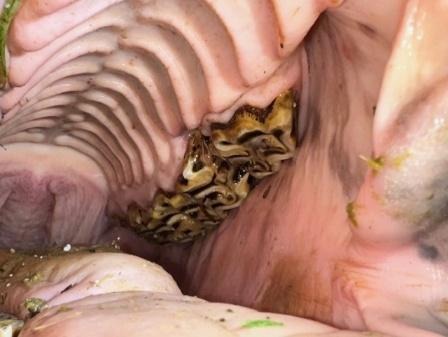
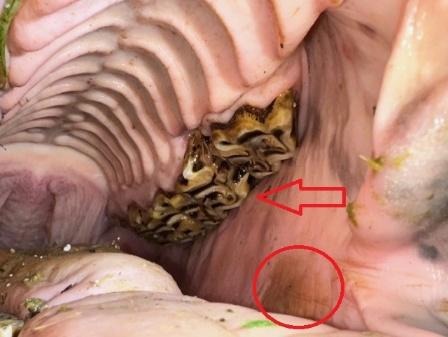
This image shows oral ulcers -the tan staining, in the oval circle and sharp points on the top teeth on the cheek side, red arrow.
Who Should Perform a Dental Float?
Dental floating should be performed by a veterinarian trained in equine dentistry. A licensed DVM can:
- Safely sedate your horse
- Perform a thorough oral examination
- Identify underlying dental disease
- Prescribe medications if necessary
- Ensure the procedure is completed safely and effectively
Routine dental exams are an important part of preventative care and can help identify issues before they become serious problems.
The image on the left shows a mild slant mouth and a discolored incisor. The image on the right shows the middle 2 top incisors are shorter than the outer incisors, interfering with the side to side motion of the mouth while chewing. There is also possible root exposure on all the upper incisors.
The image above shows a horse with a moderate overbite or a “parrot mouth”. Keeping up with floating these teeth are crucial as it can negatively affect grazing and how much they can eat.
How Often Should Horses Have Dental exams?
Most horses benefit from a dental exam once every 6-12 months. Frequency can vary depending on age, diet and individual dental health. Young horses, senior horses and performance horses may require more frequent evaluations.
Regular dental care plays a major role in your horse’s overall health and wellbeing. By scheduling routine dental exams and floats with a qualified equine veterinarian, you can help your horse stays comfortable, eat properly and perform at their best for years to come!