
If you’ve lived in Cranbrook for more than a single spring season, you know that our beautiful backyard comes with a few tiny, unwanted hitchhikers. As much as we love hiking the Community Forest or exploring the trails around the Elk Valley, the arrival of warmer weather means tick season is officially here.
At Tanglefoot Veterinary Services, we believe that a healthy pet is a happy pet – and that starts with being informed. Ticks can be more than just a localized “ick” factor; they can carry serious diseases that affect your dog’s long-term health.
In this ultimate guide, we’re breaking down everything you need to know about ticks in BC, how to spot the symptoms of tick-borne illness, and – most importantly – how to keep your furry best friend safe.
What Do Ticks Look Like (And Where Are They Hiding)?
Before they’ve had a “snack,” most ticks are tiny – about the size of an apple seed or even a pinhead. They are usually flat, oval-shaped, and dark brown or reddish-black.
However, once a tick attaches to your dog and begins to feed, it becomes engorged. At this stage, they can swell to the size of a small grape and take on a greyish-blue hue.
Common Ticks in British Columbia
Here in the East Kootenays, our primary “neighbors” are:
- The Rocky Mountain Wood Tick: The most common visitor in our area. While they don’t usually transmit Lyme disease, they can occasionally cause “Tick Paralysis” (a temporary loss of muscle function) via a toxin in their saliva.
- The Black-legged (Deer) Tick: Though less common in the Kootenays than on the Coast, these are the primary carriers of Lyme Disease.
How Do Dogs Get Ticks?
Ticks don’t jump or fly. Instead, they practice a move called “questing.” They climb to the tips of long grass or shrubs and wait with their front legs outstretched. When your dog brushes past, the tick simply hitches a ride and crawls through the fur to find a cozy spot to attach – usually around the head, ears, or neck.
Symptoms of Ticks on Dogs: What to Watch For
Sometimes you’ll find the tick itself, but other times, the symptoms are the first clue.
1. The Physical “Bump”
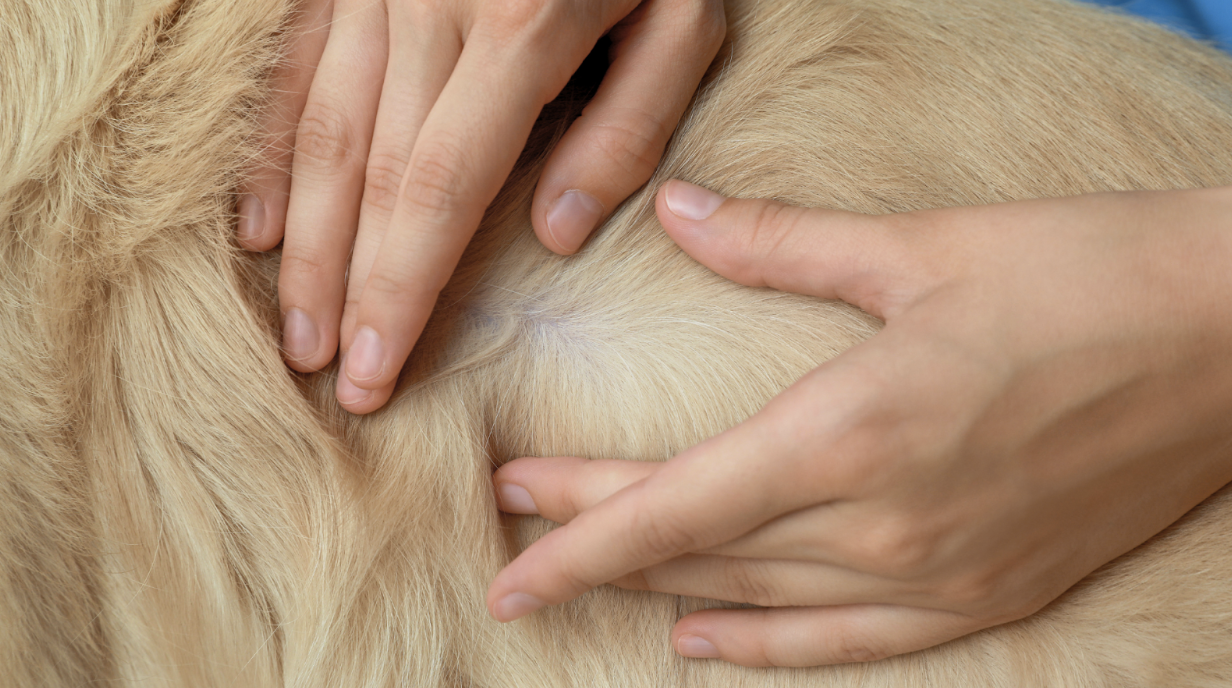
When petting your dog, look for any new, small, hard lumps. If you part the fur and see something that looks like a skin tag but has tiny legs, you’ve found a tick.
2. Skin Irritation
You might notice a “tick crater” – a small, red, inflamed circle where a tick was previously attached.
3. Changes in Behavior (The Red Flags)
In our region, keep a close eye out for these more serious symptoms, which could indicate a tick-borne illness or tick paralysis:
- Wobbliness or Weakness: Difficulty standing up or a “drunken” walk (often starting in the back legs).
- Lethargy: If your high-energy Lab suddenly doesn’t want to get off the couch.
- Loss of Appetite: Turning their nose up at their favorite treats.
- Fever: Your dog’s ears or nose might feel unusually hot.
If you notice your dog acting “off” or showing signs of weakness after being in the brush, please call us immediately.
How to Perform a “Tick Check” After a Hike
After a day out on the trails, a 60-second “nose-to-tail” check is your best line of defense after external parasite control. Run your hands over your dog’s body, applying gentle pressure to feel for bumps.
Don’t forget these “Hidden” Spots:
- Inside the ears (a favorite hiding spot!)
- Between the toes and paw pads
- Under the collar
- Under the “armpits” and groin area
- Around the eyelids
Treatment: How to Safely Remove a Tick
If you find a tick, don’t panic! Here is the Tanglefoot-approved way to handle it:
- Use the Right Tools: Use a pair of fine-tipped tweezers or a specialized “Tick Twister” tool.
- Grasp at the Base: Get as close to the skin as possible, grasping the tick by its head/mouthparts.
- Pull Steadily: Use firm, even pressure to pull the tick straight out. Avoid twisting or jerking, as this can cause the mouthparts to break off in the skin.
- Clean Up: Clean the bite area with rubbing alcohol or soap and water.
- Save the Tick: If you’re worried, put the tick in a small container or Ziploc bag. We can help identify it and determine if further testing is needed.
Common Myths to Avoid: Please do not use a hot match, Vaseline, or peppermint oil to try and “suffocate” the tick. These methods can actually cause the tick to regurgitate back into your dog, increasing the risk of infection.
Prevention: The Best Medicine
While we can’t stop ticks from living in our beautiful mountains, we can stop them from hurting our pets.
At Tanglefoot, we advocate for a proactive approach. There are several highly effective, vet-approved preventatives available:
- Oral Chews: Many owners love these because they taste like a treat and provide 30 days of protection.
- Topical Treatments: Easy-to-apply drops that sit on the skin.
Unlike over-the-counter options, our prescription preventatives are rigorously tested for safety and efficacy. We’ll work with you to find the option that fits your dog’s lifestyle and your budget.
We’re Here to Help!
At Tanglefoot Veterinary Services, we want you and your dog to enjoy everything the East Kootenays have to offer without fear. Whether you need a demonstration on how to use a tick tool or you want to get your pup started on a prevention plan, our team is always here for a friendly chat.
Ready to protect your pup for the season? Contact our Cranbrook team today to book a consultation!