
EHV (Equine Herpesvirus) is a highly contagious virus that can cause respiratory illness, abortion in
mares, and in some cases, serious neurological disease (EHM).
How It Spreads:
Horse-to-horse contact, shared equipment, contaminated hands/clothing, and aerosolized droplets.
Treatment:
Supportive care such as IV fluids and anti-inflammatories.
Recommend contacting your veterinarian for evaluation if you are suspicious based on your horse’s
clinical signs
Limit travel:
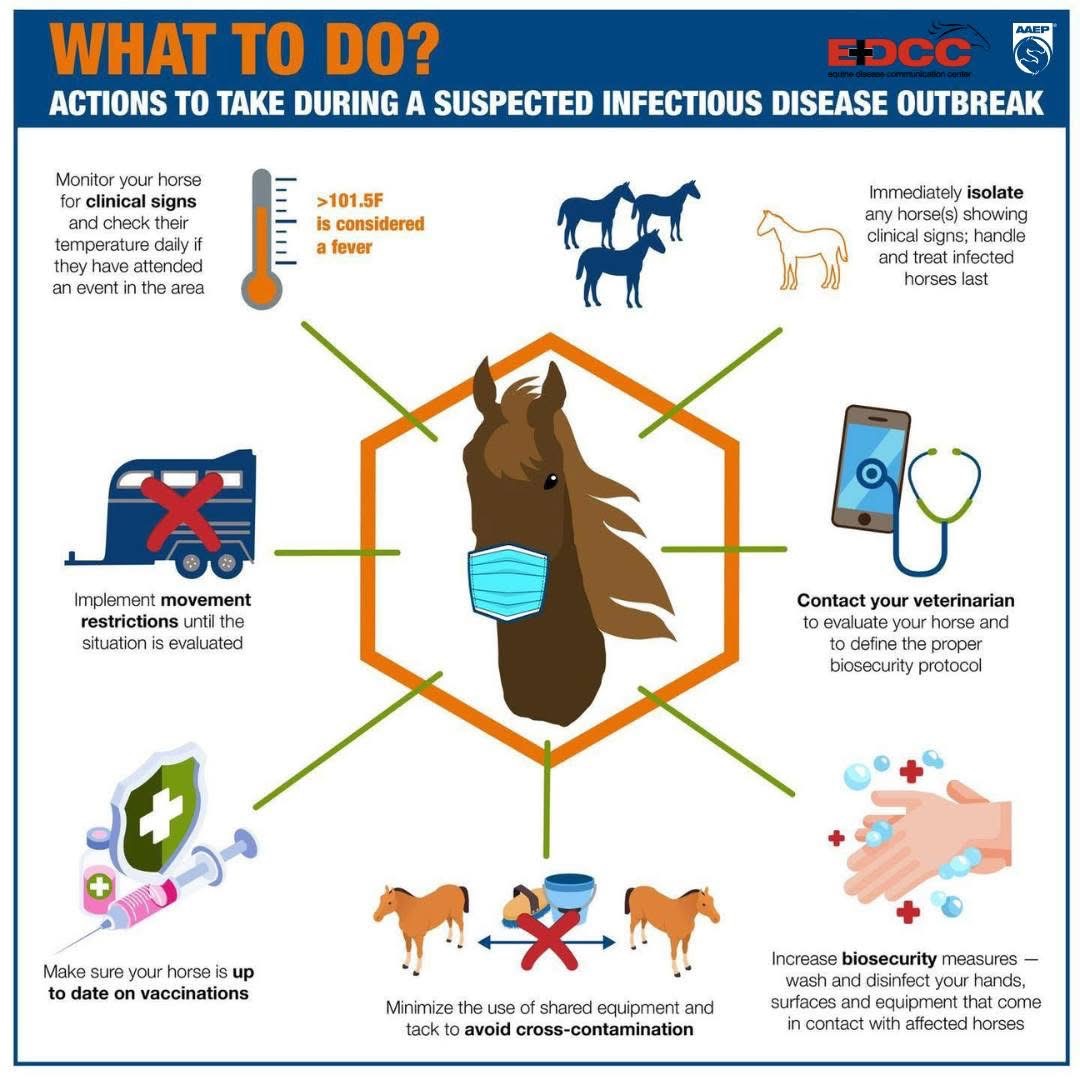
Avoid hauling, shows, clinics or mixing of horses where recent cases have been identified
- Practice biosecurity, especially when travelling, to limit the spread of the virus
o limit contact with other horses
o use your own water buckets and food sources
o use your own equipment/tack
o manage suspected cases last to avoid cross contamination
Watch for Signs:
- Fever
- Off food and water
- Cough or nasal discharge
- Lethargy
- Hind-end weakness or toe-dragging
- Sudden abortion in pregnant mares
Protect Your Horse:
- Isolate new or sick horses
- Don’t share equipment
- Disinfect stalls, trailers, and tools
- Monitor temperatures during travel or events
- Fevers are often the 1st sign
⚠️ Any horse with a fever should be isolated immediately.⚠️ - Keep vaccines up to date for EHV. Talk to your Doctor if the vaccine is a right match for your
horse.
Consider boosting the Flu/Rhino vaccines every 6mths if the horse is at risk for
exposure
Equine Disease Communication Center’s website
https://equinediseasecc.org/biosecurity
The AAEP is a good online resource-
https://aaep.org/resource/ehv-faq-for-owners/